
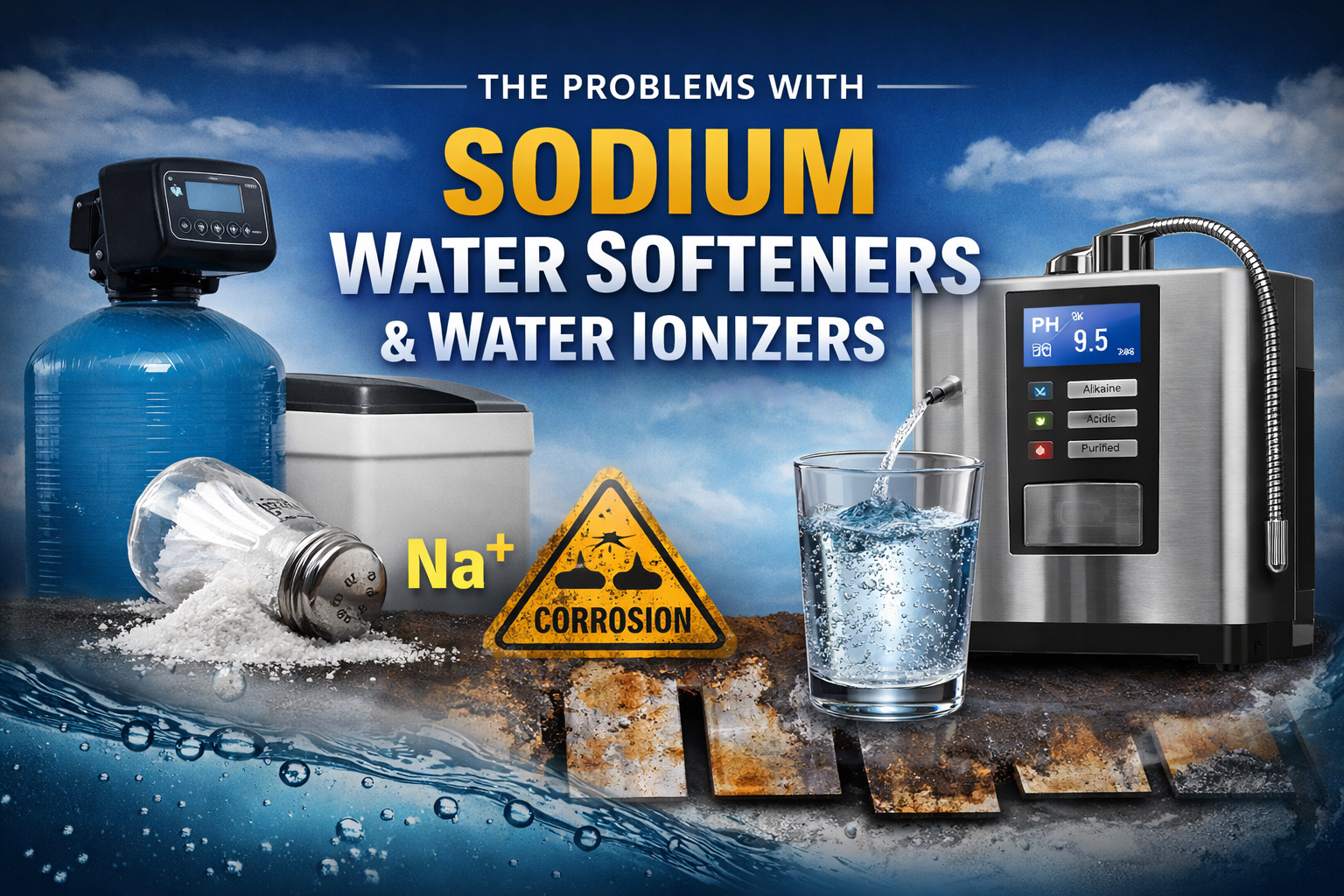
The Problems With Sodium Water Softeners
Whenever you are using a sodium-based water softener with a water ionizer, you should use caution. Sodium has properties that can potentially harm a water ionizer if used continuously without proper filtration. Here are several important considerations:
- Sodium is corrosive. Excessive sodium exposure over time may damage the platinum coating on the titanium plates used in water ionizers. Platinum-coated titanium plates are extremely durable and can last many years under normal conditions, but high concentrations of sodium can increase the risk of corrosion.
- When sodium-softened water is used without removing the sodium, the ionizer is continuously exposed to elevated sodium levels. Over time this may shorten the life of the electrolysis chamber.
- Sodium is highly electrically conductive. For this reason, some people add small amounts of sodium when attempting to produce very strong acidic water. This can work, but it should only be done occasionally and the system should be flushed thoroughly afterward.
- Sodium is a mineral that the body needs in small amounts, but excessive intake may be undesirable for some individuals. Many people are advised by their doctors to limit sodium intake.
Water Ionizers & Whole House Water Softeners
Water softeners can introduce additional sodium into household water. While they are sometimes necessary for extremely hard water, precautions should be taken when pairing a water softener with a water ionizer.
The most common solution is to remove the sodium before the water reaches the ionizer.
1. Reverse Osmosis Filters Out Sodium Added by Water Softeners
Reverse osmosis (RO) is widely used to remove dissolved salts, including sodium, from water. Under-sink RO systems are commonly installed in homes and can effectively prepare softened water for use with a water ionizer.
RO systems remove a very high percentage of dissolved contaminants and salts. When selecting a system, choose one with a suitable membrane and adequate flow rate (around 2 liters per minute or greater if the ionizer requires it).
2. Water Must Be Remineralized After Reverse Osmosis
Reverse osmosis removes most dissolved minerals from water. Because water ionizers require some mineral content to conduct electricity and perform electrolysis, remineralization is necessary after RO filtration.
- Install a reverse osmosis system that includes a remineralization stage, or
- Add a remineralization filter after your existing RO system.
You can learn more about this here: How to Use a Water Ionizer With Reverse Osmosis.
Bypassing Your Water Softener
Another option when you have a whole-house water softener is to bypass it for the kitchen sink. A separate line can be run to the under-sink area that supplies unsoftened water directly to the water ionizer.
If you choose this option, extremely hard water may still require treatment. TAC (template-assisted crystallization) anti-scale systems can sometimes help reduce scaling without adding sodium.
Another approach is to soften only the hot water line in your home while leaving the cold water supply unsoftened. In this case, the water ionizer would use the untreated cold water line.
If your water hardness is extremely high (over about 300 ppm), a softener combined with reverse osmosis may still be the best solution. Water ionizers generally perform best with hardness levels below about 140 ppm.
Anti-scale devices can help manage moderate hardness, but if the water is excessively hard they may not be sufficient on their own. Very hard water can reduce electrolysis efficiency and limit the performance of the ionizer.