
Analyzing and Comparing Brands of Bottled Water
Many people buy bottled water because they want something cleaner, safer, and better tasting than ordinary tap water. That goal makes sense. However, bottled water is not always as simple or as pure as the label may suggest.
Different brands vary in pH, mineral content, filtration methods, and storage conditions. In many cases, bottled water is also more expensive over time than using a good home filtration system.
This page gives a practical overview of the main issues people should understand when comparing bottled water, along with testing results and a few healthier alternatives for home use.
Testing the pH of Popular Bottled Water Brands
One of the most noticeable differences between bottled water brands is pH. Some are slightly acidic, some are closer to neutral, and some are marketed as alkaline. Because of that variation, it helps to look at actual testing rather than relying only on label language.
Below is a short video showing the pH testing of 20 bottled water brands.
Testing the pH of 20 brands of bottled water.
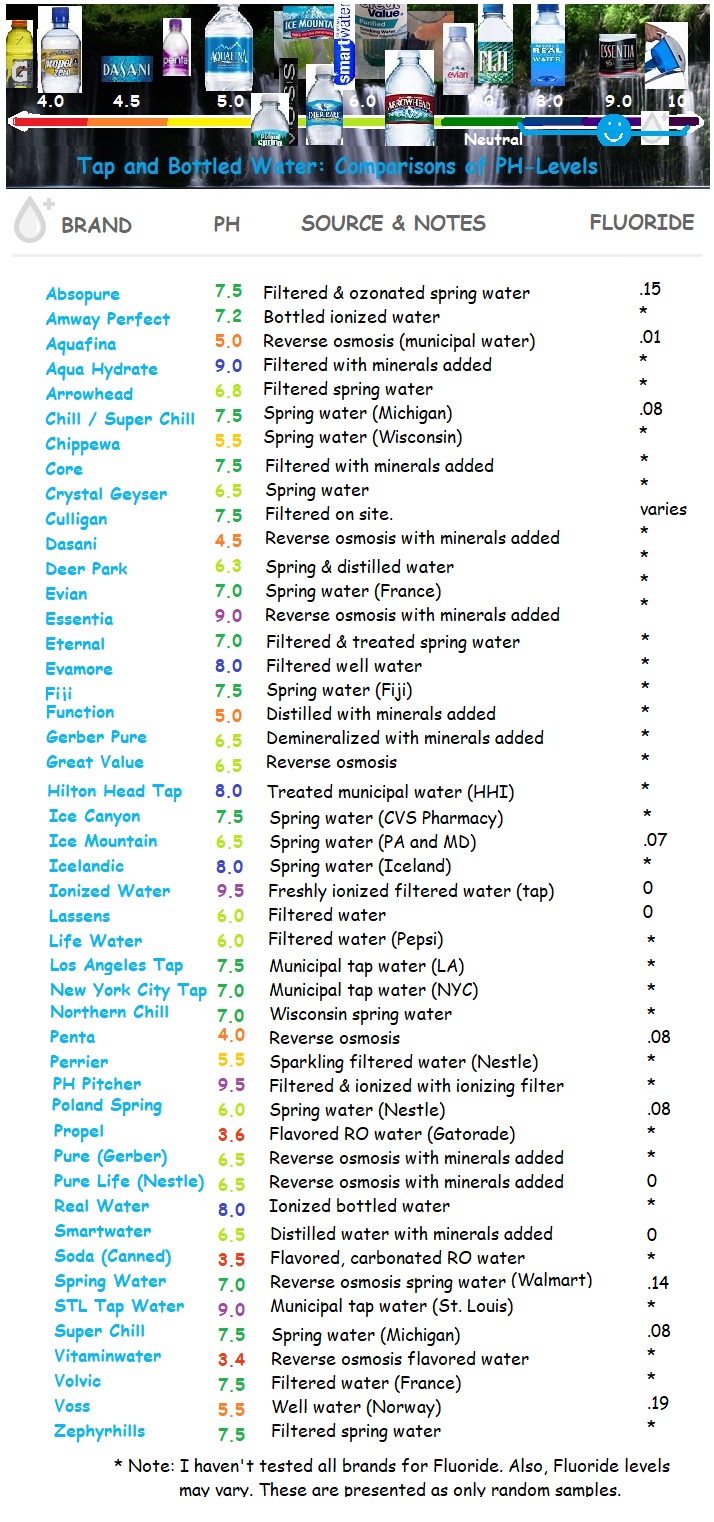
Brands tested include a variety of bottled waters as well as several tap water samples for comparison.
Three Common Concerns With Bottled Water
1. Wide variation from brand to brand
Bottled water is not one uniform product. Different brands can vary significantly in pH, mineral content, taste, and processing method. Some are spring waters, some are purified waters, and some are enhanced or alkaline waters.
2. Plastic contact and long storage times
Many people prefer to reduce their use of bottled water because of concerns about plastic contact, heat exposure during transport or storage, and the growing discussion around microplastics in the food and water supply.
Another growing concern surrounding bottled water is exposure to microplastics and nanoplastics. Recent research has detected microscopic plastic particles in many bottled water brands. These particles can originate from the plastic bottles themselves, the caps, or the bottling process.
While research into the long-term health implications is still developing, this issue has led many consumers to reconsider relying heavily on bottled water and to explore filtration or home water systems that reduce plastic exposure.
3. Cost over time
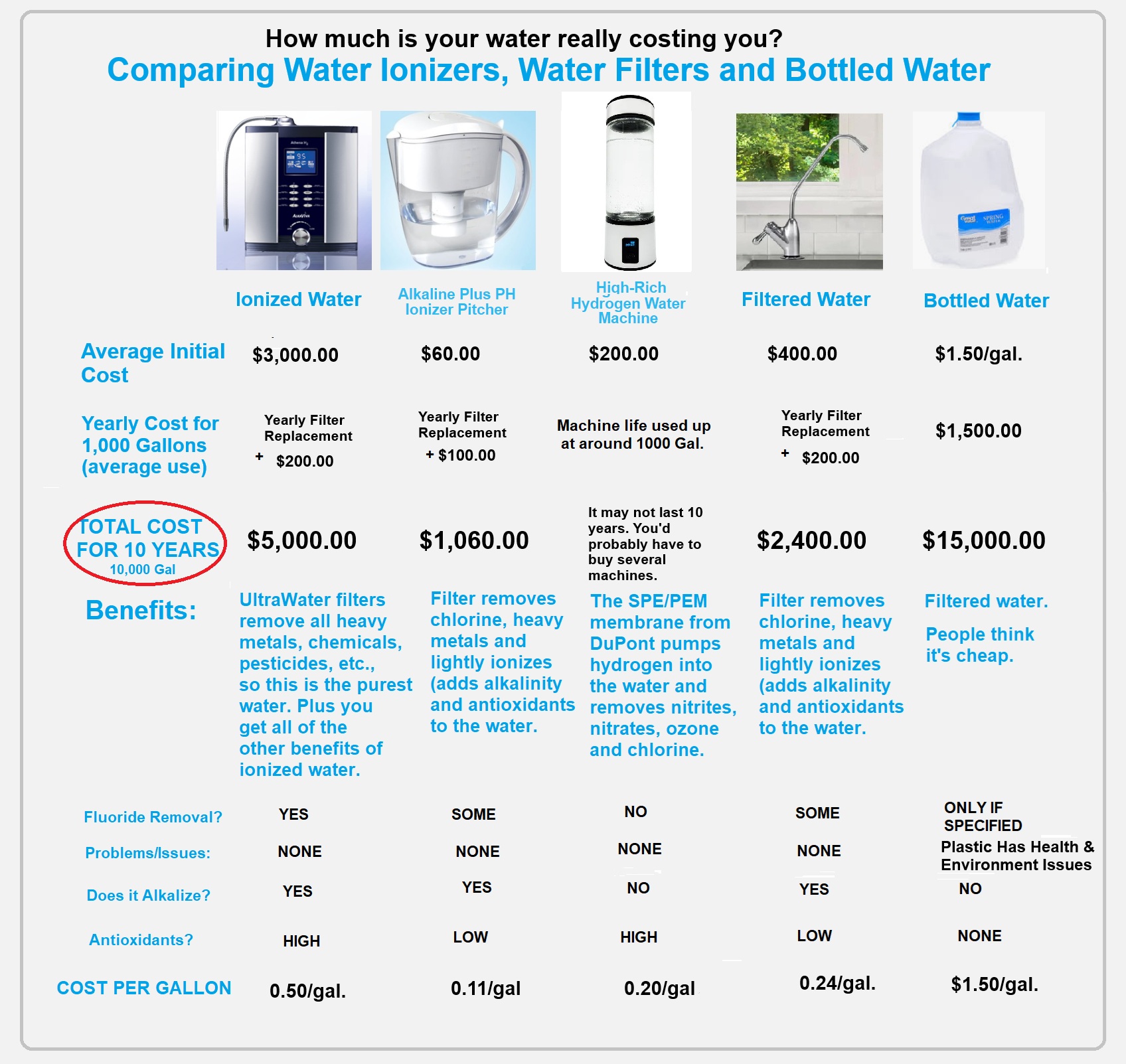
Even when bottled water seems inexpensive at the store, the long-term cost adds up quickly. For many families, using a quality home filtration system becomes far more practical and economical over time.
Bottled Water vs. Filtered Tap Water
Many people assume bottled water is automatically superior to tap water, but that is not always the case. Municipal water systems are generally subject to ongoing testing and public reporting requirements. Meanwhile, bottled water quality depends heavily on the brand, its source, and how it has been processed and stored.
For many households, a good home water filter offers a more consistent and cost-effective way to improve water quality while reducing dependence on single-use plastic bottles.
If you would like a broader overview of home filtration options, visit our Water Filtration Basics page.
Cost Comparison Over Time
Bottled water can be convenient, but it is often one of the most expensive ways to supply a household with drinking water. Over time, many people find that a quality filter or water system costs less while offering greater control over taste, filtration, and convenience.
Better Options for Home Use
For people who want a practical alternative to bottled water, improving the water in your own home is often the most reliable long-term solution.
There are several good options depending on budget and goals:
- Portable filter pitchers are a simple starting point for people who want better tasting water with basic filtration.
- Advanced filtration systems provide a more consistent long-term solution for improving water quality at home.
- Water ionizers may appeal to those looking for advanced filtration along with broader water customization features.
Looking for a Better Alternative to Bottled Water?
Explore practical options for cleaner, better tasting water at home, from simple filter pitchers to advanced water systems.
Learn About Water Filtration →Frequently Asked Questions About Bottled Water
Is bottled water always better than tap water?
Not always. Some bottled waters are good quality, but others may offer little advantage over well-filtered tap water. Quality varies by source, processing method, and storage conditions.
Can bottled water be acidic?
Yes. Some bottled waters test slightly acidic, while others are closer to neutral or alkaline. That is why direct testing can be helpful when comparing brands.
Why do many people switch away from bottled water?
The most common reasons are long-term cost, plastic waste, convenience, and the desire for more control over water quality at home.
What is a practical alternative to bottled water?
A quality home filter is often the simplest alternative. Some people begin with a pitcher filter, while others choose more advanced filtration or water ionizer systems for long-term use.
Many people who begin comparing bottled water eventually start exploring home water systems that allow them to filter water more thoroughly and adjust mineral content. If you’d like to learn more about how alkaline ionized water systems work, you can read our guide here: Benefits of Alkaline Ionized Water.