
How and Why Test Ionized Water With pH Reagent Drops
Published by Alkaline Water Plus
Testing Ionized Water With pH Reagent Drops
Last updated: March 2026
Testing the pH of your ionized water occasionally is one of the simplest ways to confirm that your water ionizer is working properly. Using pH reagent drops makes it easy to see the acidity or alkalinity of your water with a quick color change.
This guide explains both why pH testing matters and how to test ionized water using reagent drops. With just a small sample and a few drops of reagent, you can confirm the approximate pH of the water your ionizer is producing.
If you would like a broader overview of home hydration options, you may find our guide to healthy water systems helpful.
Why Test Ionized Water With pH Reagent Drops?
There are many ways people attempt to “guess” the pH of alkaline water, but when you want a true answer, pH reagent drops are the most practical scientific option for home testing.
- They are accurate without major expense. pH reagent drops are a reliable method for measuring pH without purchasing a quality laboratory-grade pH meter and maintaining calibration solutions.
- They provide a wide-range reading. Ionized water often measures outside the range of typical test strips, especially on higher alkaline settings. A wide-range reagent is designed for this.
- They verify real output, not estimates. Ionizers that display or announce pH levels are providing estimates. Your source water chemistry can change the real pH. Reagent testing shows what you actually poured.
- They help confirm ionizer performance over time. Periodic testing helps you confirm that alkaline water and acidic byproduct are being produced as expected.
In short: if you want reliable results without a large outlay of money, pH reagent drops are the simplest and most dependable choice.
What Is pH?
The term pH stands for “potential of hydrogen.” It is a scientific way of measuring how acidic or alkaline a liquid is based on the concentration of hydrogen ions present in the solution.
The pH scale ranges from 0 to 14:
- 0–6 — acidic
- 7 — neutral
- 8–14 — alkaline (or basic)
The scale is logarithmic, which means each step represents a ten-fold change in acidity or alkalinity. For example, water with a pH of 6 is ten times more acidic than water with a pH of 7, while water with a pH of 8 is ten times more alkaline than neutral water.
Because ionized water systems can produce a range of pH levels depending on the setting and the mineral content of the source water, testing occasionally helps confirm the approximate pH of the water you are drinking.
How pH Reagent Drops Work
pH reagent drops work by using chemical indicators that change color depending on the acidity or alkalinity of the water being tested.
The reagent typically contains a blend of several pH-sensitive indicator compounds. Each compound changes color at a different point on the pH scale. When they are combined together in one solution, they create a wide color spectrum that allows you to estimate pH visually.
When a drop of reagent is added to a small water sample, the indicators react with the hydrogen ion concentration in the water. This chemical reaction produces a color change that corresponds to a specific pH range.
You then compare the resulting color to the pH chart printed on the reagent bottle to estimate the pH of the sample.
This method is widely used because it provides a quick, practical, and inexpensive way to estimate pH without requiring a laboratory meter or electronic testing equipment.
Why Testing Ionized Water pH Matters
Many water ionizers display or announce the pH level of the water they produce. However, these readings are only estimates. The actual pH depends on your source water, including mineral content and buffering capacity.
Because of this, the only way to know the real pH of the water being produced is to test it directly.
Testing also confirms that the machine is separating the water properly during electrolysis. When your ionizer produces alkaline water from the drinking spout and acidic water from the secondary outlet, it indicates that the ionization process is functioning correctly.
For those considering installing a system at home, you can explore our full range of water ionizers to learn how these systems work.
Simple Directions for Using pH Reagent Drops
Testing your water only requires a very small sample.
- Pour about half an ounce of water into a small container.
- Add 1–2 drops of pH reagent.
- Stir or swirl gently.
- Observe the color change and compare it to the color chart provided.
The resulting color will indicate the approximate pH level of the water.
Tips for Testing Water Samples
You only need a small amount of water to test the pH accurately. Using a small sample helps conserve the reagent so the bottle lasts longer.
I typically use the small vial included with the pH kit and fill it about half full. Or I use a shot glass and test about one tablespoon of water.
Start with about two drops of reagent, swirl gently, then compare the color to the chart.
If the sample is too light to read, add one more drop. Avoid adding too many drops, because the color can become overly dark and harder to interpret accurately.
Quick Guide: What pH Reagent Colors Mean
pH reagent drops change color depending on the acidity or alkalinity of the water being tested. After adding a drop or two to your sample, compare the color with the chart printed on the bottle.
- Yellow or orange – Acidic water
- Green – Neutral water (around pH 7)
- Blue – Mildly alkaline water
- Purple or pink – Strongly alkaline water
Alkaline ionized drinking water typically falls within the blue to purple range depending on the ionizer setting and the mineral content of the source water.
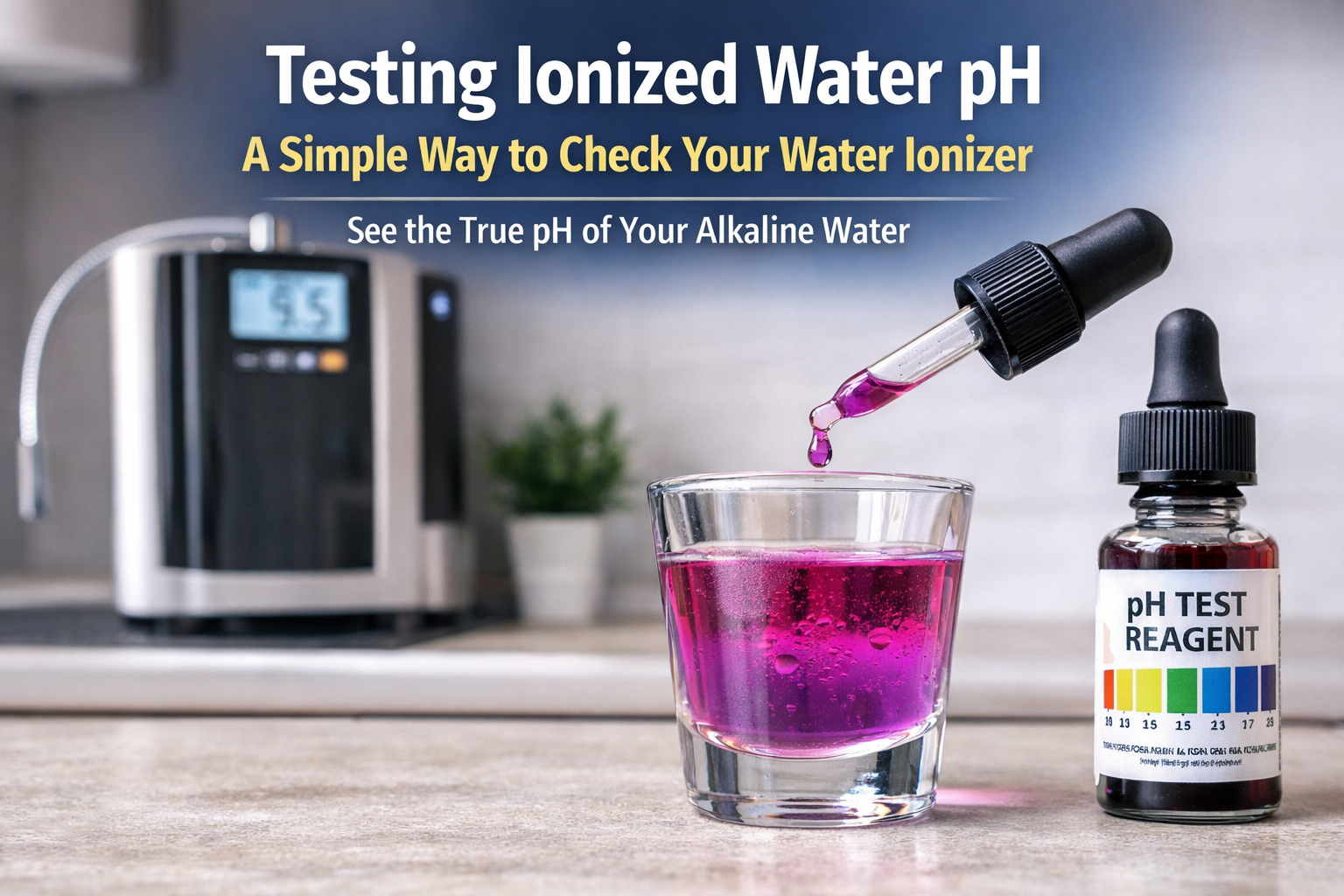
The hero image above shows an example of ionized water changing to a vivid color when tested with pH reagent drops.
A Professional Wide-Range pH Reagent
The reagent included with most ionizer testing kits is a professional, scientific wide-range pH reagent. It is designed to measure a broad spectrum of acidity and alkalinity, which makes it particularly useful for testing ionized water.
This type of reagent is not typically sold in retail stores.
While the reagent may seem expensive at first, the good news is that it lasts a long time when used sparingly. Because each test only requires a drop or two, a single bottle can often last many years.
What Comes in the pH Reagent Kit
- 5 ml bottle of scientific-quality pH reagent
- A dropper attached to the lid for easy dispensing
- A pH color chart printed on the bottle for quick comparison
Common Mistakes When Testing Ionized Water
- Using too much reagent, which can make the color too dark to read.
- Testing immediately after turning on the ionizer without letting the water flow for a few seconds.
- Using test strips designed only for neutral ranges.
- Using large water samples, which wastes reagent unnecessarily.
Using a small sample and just a few drops of reagent produces the most accurate and easiest-to-read results.
A Simple Way to Monitor Your Water Ionizer
Testing your water with pH reagent drops is quick, practical, and easy. With just a few drops and a small water sample, you can confirm that your ionizer is producing the expected range of alkaline or acidic water.
Performing a quick test occasionally gives you confidence that your machine is continuing to operate properly and that the water you are drinking matches the level you intend to pour.
Frequently Asked Questions
How many drops of pH reagent should I use?
Most tests only require one or two drops. If the color is too light to read, add one more drop. Using a small sample helps the reagent last longer.
Can I add more drops if the color is hard to see?
Yes, but add them gradually. Too many drops can darken the solution and make it harder to match to the chart.
How long do pH reagent drops last?
If stored at room temperature and away from direct sunlight, pH reagent drops can remain effective for several years.
Are pH reagent drops better than pH test strips for ionized water?
Usually, yes. Reagent drops typically provide a wider range than many paper strips, making them better suited for testing alkaline ionized water.
About Alkaline Water Plus
Alkaline Water Plus has spent decades helping homeowners understand and install advanced water ionizer systems. Our goal is to provide clear, practical information so customers can make informed decisions about their home hydration systems.
We regularly test water ionizers, filtration systems, and water quality using professional tools to help ensure the equipment we recommend performs as expected.
Learn more about water ionizers and how they can support your home hydration system.
