Molecular Hydrogen and Cellular Aging (Senescence)
Published by Alkaline Water Plus
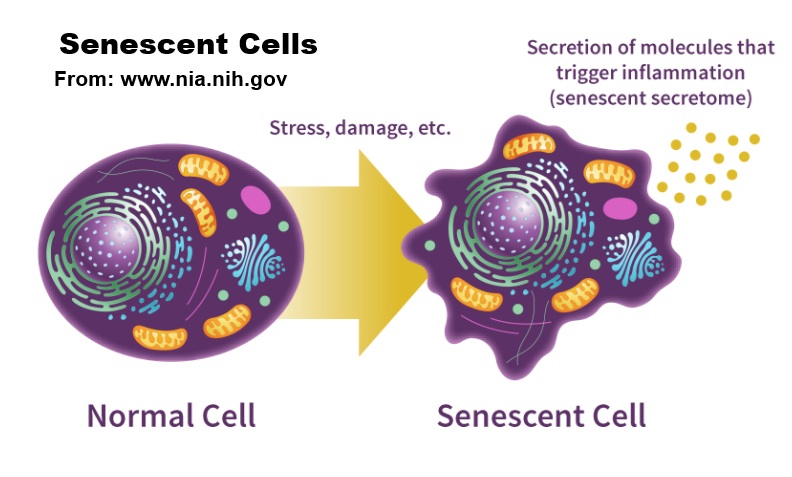
Cellular Aging
Senescence (səˈnəsəns) is a scientific term that basically means “aging”; it refers to a process of cells losing their ability to divide and renew. A lot of research is happening right now on the topic of senescence. As cells age, they often eventually stop working (turn themselves "off"). This is a natural part of the cycle of life, but recently scientists have found that a very special antioxidant, Molecular Hydrogen, show positive signs of benefitting those cells (i.e., reduce senescence) and therefore extend the cells’ ability to rejuvenate.
Aging Cells
Researchers believe that senescent cells (inactive, damaged cells) are not just inactive. They're actually bad for the body when they accumulate to high levels. They're not really dormant as they once were thought to be. They believe the presence of old, inactive cells in abundance contributes to inflammation, which in turn causes conditions like arthritis and further deterioration of the body. Because of this, it is theorized that if once a cell has stopped being able to do its job, it was either removed or fixed, it would alleviate a lot of ills.
Two Ways to Handle the Aging Cell
Senescence is now theorized to be somewhat reversible. There are two ways being worked on right now to handle the aging cell: 1) kill it, and 2) fix it.
Killing the aging cell is certainly one way to tackle the problem. Researchers working on this are showing some promise that doing this can slow down the aging process. But ridding the body of senescent cells is only theoretical and has not come close to the human trial phase yet.
Fixing damaged cells, however, has already reached the human trial stage with trials where test subjects consume Free-hydrogen (also known as molecular hydrogen) in a variety of ways. Hydrogen consumption has been shown to be both safe and effective. Thousands of studies have been done so far on Molecular Hydrogen and its effective in reducing or alleviating ills. One theory is that the hydrogen assists in repairing the senescent cells, so they can act like normal cells again.
Molecular Hydrogen has also been found to be harmless.
How to Get Molecular Hydrogen
One would think hydrogen (H2) would be easy to get, however it is rare to find Hydrogen as its own molecule (not combined with oxygen) close to the earth's surface. Hydrogen is so light that it evaporates and does not stay near the ground. If it is bonded to other molecules (other than itself) it isn't "free". In a bonded state it's the most common element, but it can't fight free-radicals in this state. For instance, hydrogen is in H2O (obviously), but normal H2O can't fight free-radicals. It has zero antioxidants in it.
A water ionizer or a hydrogen machine can produce free-hydrogen. There are also less popular hydrogen gas machines. Hydrogen water machines are cheaper (upfront), but are limited in that they can't adjust the pH of the water. The warranties and filtration are also inferior in a hydrogen water machine vs a water ionizer.
There are a variety of devices that can create hydrogen water. My personal favorite is a water ionizer, which both alkalizes and pumps hydrogen into the water. My second-choice for getting Molecular Hydrogen is to use a HydrogenWater Generator. These won’t alkalize the water but they do pump Hydrogen into it.
More Research on Molecular Hydrogen
An earlier article I wrote about Hydrogen explains in more detail about the various medical studies which validate it as an effective and powerful antioxidant.
Refer to the following scientific papers for further information related to the healing abilities and safety of Molecular Hydrogen with specific reference to solving the problem of cellular senescence (aging).
2016 Molecular Hydrogen Alleviates Cellular Senescence in Endothelial Cells.
The study is geared to showing that molecular hydrogen (H2) has beneficial vascular effects and therefore hydrogen-rich water may prove to be an effective anti-aging drink.
This article shows that molecular hydrogen (H2) is a very unique antioxidant and can both prevent and cure many ailments. With no adverse effects, it doesn’t affect the normal cell functions or signaling. It permeates cell barriers to effectively repair cells after oxidative damage has occurred.
Article Image credits: FilsingerG: Science in the News, Harvard University