
UltraWater Filtration: Exceptionally Broad Contaminant Reduction Without Stripping Away the Water's Minerals
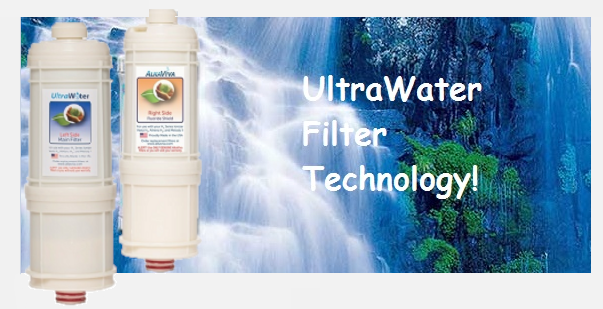
UltraWater is much more than a standard carbon filter. It combines multiple specialized filtration technologies to address an unusually broad range of drinking-water contaminants we find in US water, while allowing most of the water's existing dissolved mineral content to remain.
That distinction is particularly important for a water ionizer. Minerals such as calcium and magnesium contribute to the water's conductivity and help make electrolysis possible.
But the real reason I consider UltraWater exceptional is not simply what is inside the filter. It is what the filtration has actually demonstrated in independent laboratory testing.
UltraWater has been tested against 249 drinking-water contaminants by independent NELAP-accredited laboratories, with the vast majority reduced to non-detectable levels.
View the UltraWater Laboratory Test Results »
Why AlkaViva Developed Its Own Water-Ionizer Filtration
AlkaViva began designing and manufacturing its own water-ionizer filters in Reno, Nevada in 2008. The important point is not simply that the filters are made in the United States. It is the control that domestic design and manufacturing gave AlkaViva over the filtration media, filter construction and manufacturing process.
Water-quality problems vary considerably throughout the United States. Depending on location, drinking water may contain disinfectants such as chlorine or chloramine, heavy metals, agricultural chemicals, industrial contaminants, pharmaceuticals, PFAS and other substances.
Rather than relying on the relatively simple filtration commonly supplied with many water ionizers, AlkaViva developed a multi-media system designed to address a much broader range of water-quality concerns.
Each filtration material has a specific job. UltraWater combines multiple technologies so that difficult contaminant groups can be targeted through several filtration mechanisms, rather than relying on one type of activated carbon to do everything. This multi-mechanism approach is one of the things that sets UltraWater apart.
UltraWater Was Put Through an Unusually Demanding Laboratory Test
To evaluate the filtration itself, laboratory technicians created challenge-water samples by starting with deionized water and adding measured concentrations of contaminants. Where EPA maximum contaminant levels existed, starting concentrations were prepared as close as possible to those levels. Disinfectants were prepared at concentrations representative of municipally treated water.
The challenge water was passed through the UltraWater filtration system at 3 liters per minute, replicating the flow rate and contact time of an AlkaViva H2 Series water ionizer.
Importantly, no ionization or electrolysis was used during these filtration tests. That means the reported results measured what the filtration system itself accomplished rather than contaminant separation caused by the electrolysis process.
What Was Included in the Testing?
- 21 heavy metals and related elements
- 6 PFAS / "forever chemicals"
- 68 pharmaceuticals
- 7 hormones
- 45 pesticides and herbicides
- 87 VOCs and SOCs
- 15 other anions, disinfectants and related contaminants
Total: 249 drinking-water contaminants.
Examples From the Laboratory Results
Many of the contaminants tested were reduced to the laboratory's non-detectable (ND) reporting level.
| Contaminant | Before Filtration | After UltraWater |
|---|---|---|
| Lead | 0.061 mg/L | ND |
| Arsenic | 0.043 mg/L | ND |
| Chromium VI | 0.958 mg/L | ND |
| Cadmium | 0.017 mg/L | ND |
| PFOS | 0.38 µg/L | ND |
| PFOA | 0.21 µg/L | ND |
| Total Trihalomethanes | 6400 µg/L | ND |
| Glyphosate | 860 µg/L | ND |
| Total Dissolved Solids | 105 mg/L | 100 mg/L |
ND means that the contaminant was not detectable at the laboratory's specified reporting limit. It does not mean absolute zero.
See All 249 UltraWater Test Results »
Heavy Metals
The UltraWater testing included 21 heavy metals and related elements. Aluminum, antimony, arsenic, beryllium, boron, cadmium, chromium, chromium VI, copper, iron, lead, molybdenum, mercury, nickel, selenium, silver, thallium, vanadium and zinc were reduced to non-detectable levels in the reported testing. Barium and manganese were reduced to very low residual levels.
PFAS / "Forever Chemicals"
Six PFAS compounds were included in the testing. PFHxS, PFNA, PFOS and PFOA were reduced to non-detectable levels. PFBS was reduced from 0.33 µg/L to 0.002 µg/L, and PFHxA was reduced from 0.32 µg/L to 0.003 µg/L.
Taken together, the results represent approximately 99% or greater PFAS reduction across the six PFAS tested. What is particularly notable is that these reductions were achieved while most of the overall dissolved mineral content remained in the water.
Pharmaceuticals, Hormones & Personal-Care Contaminants
The laboratory testing also included dozens of pharmaceuticals, hormones and personal-care contaminants. Among the substances tested were acetaminophen, ibuprofen, carbamazepine, amoxicillin, fluoxetine, atenolol, diazepam, estradiol, estrone, progesterone, testosterone, caffeine, triclosan, DEET, parabens and BPA.
The vast majority were reduced to non-detectable levels in the reported testing.
Pesticides, Herbicides, VOCs & Industrial Chemicals
UltraWater was also challenged with dozens of pesticides and herbicides and 87 volatile and semi-volatile organic compounds. Many were reduced to non-detectable levels, including the widely used herbicide glyphosate.
How the H2 Series UltraWater Filtration System Works
AlkaViva H2 water ionizers use a two-filter system designed to provide broad contaminant reduction while allowing most of the water's naturally occurring dissolved minerals to remain.
The #1 Five-Stage Prefilter provides the first stages of protection, while the #2 UltraWater Filter uses additional specialized filtration media to address a remarkably broad range of drinking-water contaminants.
#1 Five-Stage Prefilter / Sediment Shield
Calling the standard H2 #1 filter, H2 Series Pre-Filter - Right Side, simply a sediment filter understates what it does. AlkaViva describes this filter as providing five stages of protection, enhanced by electrostatic polypropylene spun-fiber technology and high-quality carbon.
The spun-fiber media provides a mechanical barrier that helps trap sediment and particulate matter before the water reaches the more specialized filtration media. The carbon adds an important chemical-filtration component rather than making this simply a particle filter.
This first filter therefore does more than protect the second filter and the water ionizer from sediment. It is an important part of the overall H2 filtration system in its own right.
The standard #1 Five-Stage Prefilter is rated for approximately 1,000 gallons.
See the Standard H2 Replacement Filter Set »
#2 UltraWater Filter: Broad-Spectrum Contaminant Reduction
The #2 UltraWater filter builds upon that first stage with several specialized filtration technologies. Rather than relying on one type of carbon or one filtration mechanism, its different media are designed to address different contaminant groups.
BioStone Booster
UltraWater uses NSF-certified CaSO3 slow-eluting bioceramic media designed to target chlorine, chloramine and certain heavy metals.
Specialized Carbon, Zeolite & Silver
NSF-certified carbon provides extensive adsorption capacity for organic contaminants. Natural zeolite contributes additional heavy-metal reduction and ion-exchange capability, while silver helps inhibit bacterial growth within the filter between uses.
AlkaViva uses both loose-bed and compressed carbon-block applications. Its manufacturing methods are designed to increase media surface area and water contact time, giving contaminants greater opportunity to interact with the filtration materials.
UltraWater Disc Technology
One of the most distinctive components is UltraWater's proprietary disc technology. A reticulated foam disc impregnated with three different NSF-certified filtration media provides another specialized treatment stage for heavy metals and organic contaminants, including difficult substances such as arsenic.
Special Attention to Chloramine
Chloramine deserves special mention because many municipalities use it as a drinking-water disinfectant, and ordinary activated-carbon filtration may not provide strong chloramine reduction at the flow rates used by a water ionizer.
The H2 filtration system combines the carbon filtration of the #1 Five-Stage Prefilter with the specialized media in the #2 UltraWater filter. UltraWater's CaSO3 media specifically targets chlorine and chloramine, providing a treatment mechanism beyond conventional activated carbon alone.
For Extra Fluoride Reduction
If fluoride is an important concern, the standard #1 Five-Stage Prefilter can be replaced with AlkaViva's dedicated H2 Fluoride Removal Filter, while the #2 UltraWater Filter remains in place.
The Fluoride Removal Filter is rated for approximately 500 gallons.
In AlkaViva's laboratory testing with Fluoride Shield media included, fluoride started at 2 mg/L and was reduced to below the laboratory's 1 mg/L reporting limit.
Water ionization itself may provide some additional fluoride separation because fluoride is a negatively charged ion and tends toward the acidic/anode stream during electrolysis. However, the amount can vary with ionization strength, flow rate and source-water chemistry, so I do not recommend relying on electrolysis alone when fluoride reduction is a priority.
Alkaline Water Plus BUYBACK Program: H2 water ionizers automatically come with the standard #1 Five-Stage Prefilter and #2 UltraWater Filter. If you prefer the Fluoride Removal Filter when purchasing an H2 water ionizer from us, simply purchase the fluoride filter and mail the unused standard #1 filter back to us. We will refund the purchase-price value of the standard #1 filter, less a 20% restocking fee.
See the H2 Fluoride Removal Filter »
Retains Naturally Occurring Minerals
The H2 UltraWater filtration system is designed to reduce unwanted contaminants without stripping away most of the water's existing dissolved mineral content.
This is particularly important for an electric water ionizer because dissolved minerals and other ions provide the conductivity needed for electrolysis.
AlkaViva's laboratory testing illustrates this distinction particularly well: TDS changed only from 105 mg/L before filtration to 100 mg/L afterward, even while many contaminants were reduced to non-detectable levels.
UltraWater vs. Tankless Reverse Osmosis: Which Is Better?
I sell both UltraWater filtration and tankless reverse-osmosis systems, so I don't believe there is a reason to portray either technology as universally better. They work differently, and there are water conditions where I would recommend either one.
Reverse osmosis is an excellent and well-established water-treatment technology. Water is forced through a very restrictive membrane that substantially reduces dissolved salts and many other contaminants.
Tankless RO can be especially useful when the source water contains high dissolved solids, excessive salts, nitrate or other conditions where broad dissolved-solids reduction is desirable.
A Real Example: Perfect & Pure Tankless Reverse Osmosis
The Perfect & Pure Tankless Reverse Osmosis System that I sell is a good example of a modern RO system. It uses five stages of treatment:
- Sediment filtration
- Carbon-block filtration
- A high-capacity 0.0001-micron reverse-osmosis membrane
- Final carbon polishing
- MineralPlus remineralization
It is a 1000-GPD tankless system capable of producing filtered water on demand at approximately 0.68 gallons per minute.
Importantly, the system includes a remineralization stage after reverse osmosis. RO removes dissolved minerals along with many unwanted dissolved substances, so remineralization adds selected minerals back into the finished water.
UltraWater Takes a Different Approach
UltraWater does not attempt to remove most dissolved material and then add selected minerals back afterward. Instead, it combines specialized media and filter design, which combined target contaminants while allowing most of the water's existing dissolved mineral content to remain.
The UltraWater filter also combines anti-scale material as one of the layers in its makeup.
UltraWater and Tankless Reverse Osmosis Compared
| Consideration | UltraWater | Tankless Reverse Osmosis |
|---|---|---|
| Basic approach | Specialized multi-media filtration targets contaminants while allowing most dissolved mineral content to remain. | Prefiltration followed by an RO membrane that broadly reduces dissolved substances; some systems then polish and remineralize the water. |
| Heavy metals | Very high reduction: 19 of 21 tested metals/elements were reduced to non-detectable levels; barium and manganese were reduced to very low residual levels. | Very high reduction: Tankless RO systems can substantially reduce many heavy metals. Performance varies by metal and system. |
| PFAS (Forever Chemicals) | Very high PFAS reduction: approximately 99% or greater in laboratory testing. | Very high PFAS reduction: approximately 99% reported in some systems. Performance varies by system. |
| Fluoride | With the dedicated Fluoride Removal Filter, laboratory testing reduced fluoride from 2 mg/L to below the 1 mg/L reporting limit. | Many tankless RO systems report approximately 90–95% or greater fluoride reduction. Performance varies by system and operating conditions. |
| Sodium / dissolved salts / TDS | Designed to retain dissolved mineral content. TDS was 105 → 100 mg/L in AlkaViva's laboratory testing. | A major strength of RO. Designed to substantially reduce sodium and other dissolved salts as well as overall TDS. |
| Nitrate | Not primarily designed for broad dissolved-salt removal. Suitability should be based on the source-water nitrate level. | Very effective nitrate reduction is an established strength of RO. Performance varies by system. |
| VOCs and organic chemicals | Very high reduction of a broad range of VOCs and organic chemicals. | Very high reduction of many VOCs and organic chemicals through carbon filtration combined with RO. Performance varies by system and contaminant. |
| Calcium and magnesium | Most dissolved mineral content remains naturally in the water. | RO substantially reduces dissolved minerals; remineralizing systems add selected minerals back afterward. |
| Use with an electric water ionizer | Naturally compatible with a water ionizer because dissolved ions remain (except in certain cases with ion-exchange softened water). | Compatible when the RO system adequately remineralizes the water to restore minerals needed for effective ionization. |
| Water waste | No wastewater is produced during filtration. | Some water is sent to the drain as part of the filtration process. |
| Scale | Anti-scale material keeps hard-water minerals from damaging the inside of the water ionizer with scale. | This system removes or minimizes most minerals that would scale equipment. |
So Which Would I Recommend?
If the source water has a problem that specifically calls for reverse osmosis, I recommend reverse osmosis. Use of a whole house water softener which produces excessive salts, or other source water conditions, such as high dissolved solids, nitrate or certain other difficult source-water conditions may make RO the better treatment choice.
If the goal is exceptionally broad contaminant reduction while retaining most of the water's existing dissolved mineral content—especially when the water will be used in an electric water ionizer—I generally prefer the UltraWater approach.
There is no single filtration technology that is ideal for every water supply. Your source water should determine the treatment system, not the other way around.
Other Water Conditions
.01-Micron Ultrafiltration for Potable Well Water
For customers using untreated but potable well water, AlkaViva also offers an optional .01-micron ultrafiltration filter for the #1 H2 filter position.
The 500-gallon filter uses .01-micron hollow-fiber membrane technology together with CaSO3 and carbon filtration to provide an additional barrier against microorganisms and other waterborne contaminants.
This filter is intended only for water already established as potable. If well water has not been shown to be safe for drinking, a water ionizer and its internal filters should not be relied upon to make unsafe water potable.
See the H2 Series .01-Micron Well-Water Filter »
Whole-House Water Softeners
A salt-based ion-exchange softener changes the mineral composition of the water by replacing much of the calcium and magnesium with sodium. That can help control scale, but the resulting water is not the same as naturally mineralized water.
For homes with very hard water that requires a whole-house softener, tankless reverse osmosis installed after the softener can be a better option, both for drinking water in general and for use with a water ionizer. The RO system substantially reduces the sodium and other dissolved salts in the softened water, while a remineralization stage can add calcium and magnesium back to the finished water.
External UltraWater Filtration
You do not have to own an AlkaViva water ionizer to use UltraWater filtration. External UltraWater filter housings can be installed for drinking-water filtration or used ahead of other compatible water-treatment equipment.
Frequently Asked Questions About UltraWater Filtration
Does UltraWater remove every contaminant completely?
No responsible filtration claim should be stated that way. AlkaViva tested UltraWater against 249 drinking-water contaminants under specified laboratory conditions. The vast majority were reduced to the laboratory's non-detectable reporting level, while several others were reduced to very low residual concentrations. Actual performance and filter life can vary with source-water chemistry, contaminant concentrations, flow and usage.
How long does an UltraWater filter last?
The H2 UltraWater filter is rated for approximately 1,000 gallons. The standard #1 Five-Stage Prefilter is also rated for approximately 1,000 gallons. The optional Fluoride Removal Filter and .01-micron Well-Water Filter are each rated for approximately 500 gallons.
Can UltraWater be used without an AlkaViva water ionizer?
Yes. UltraWater filters can also be used in compatible external filter housings, allowing the filtration technology to be used independently of an AlkaViva water ionizer.
Not Sure Which Filtration Approach Is Right for Your Water?
Your water source matters. UltraWater, fluoride filtration, ultrafiltration and reverse osmosis each solve different water-quality problems.
Contact Alkaline Water Plus and I'll help you determine the filtration setup that makes the most sense for your particular water.